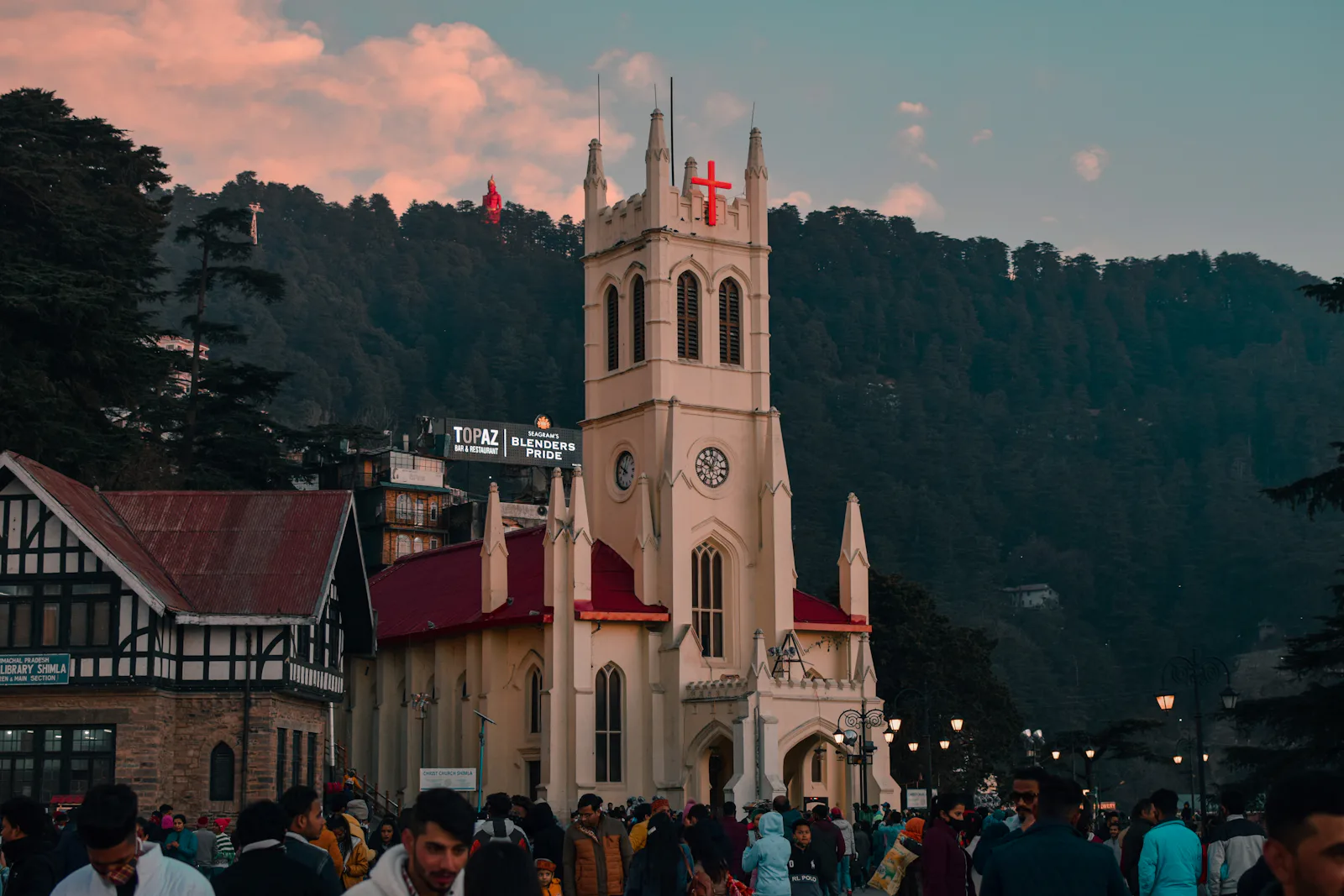
Where Shimla is and why people go
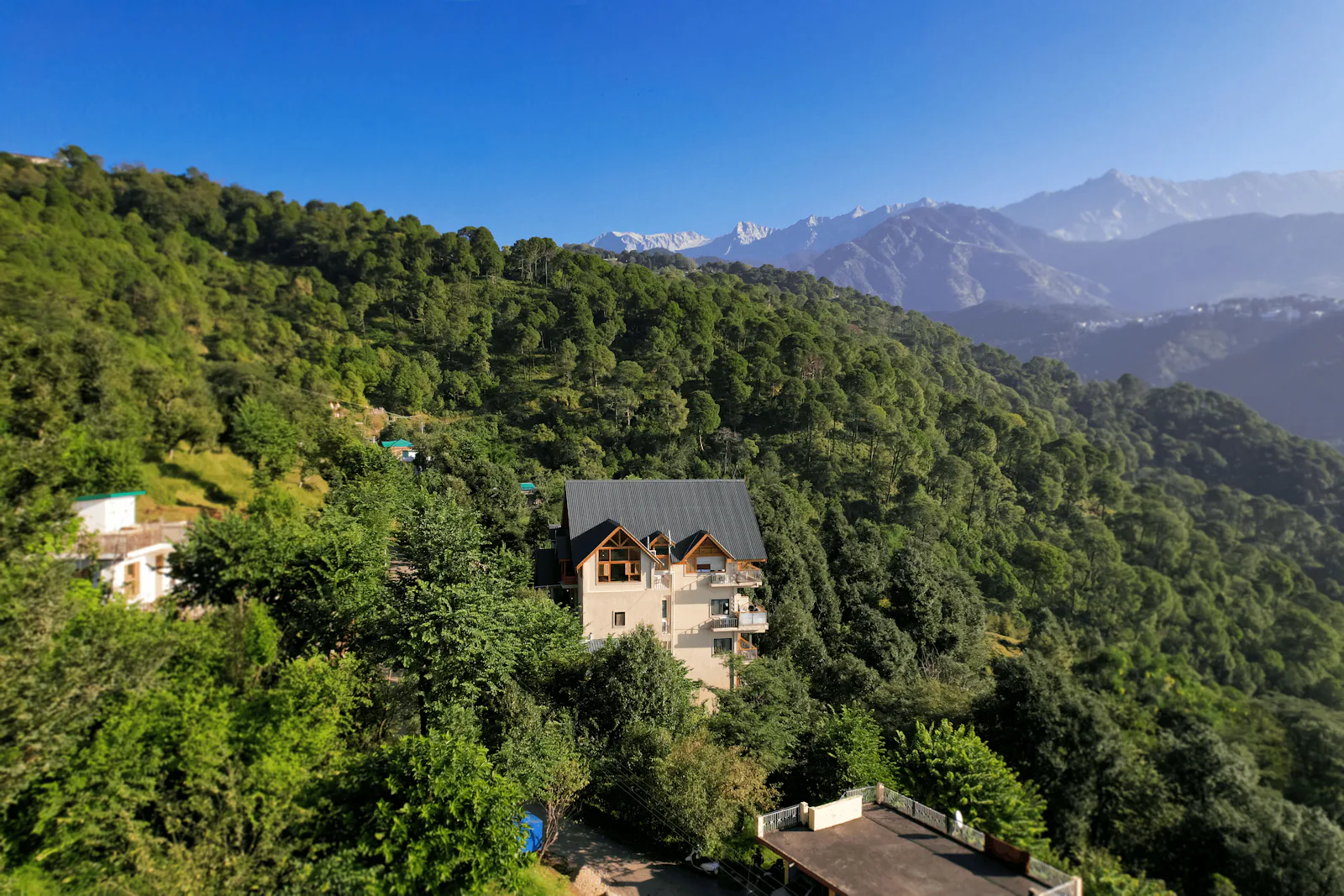
Shimla sits in the outer Himalaya, about 115 km from Chandigarh. The British made it their summer capital in the 1860s, and the town still has the Gothic church, mock-Tudor buildings and long promenade of that era. Today it's a lively state capital as well as a resort, so expect busy streets and traffic.
Travellers come for the heritage town, the Kalka–Shimla toy train, cool summer weather, winter snow nearby at Kufri and Narkanda, and as the first stop on the road to Kinnaur, Spiti or Manali.
Getting to Shimla
Most travellers come by road or rail from Chandigarh or Delhi. The Kalka–Shimla narrow-gauge railway, opened in 1903 and part of the UNESCO World Heritage listing of the Mountain Railways of India, climbs about 96 km from Kalka through more than 100 tunnels in five to six hours. It's slow, and best treated as an experience rather than the quickest way up; our toy train guide explains the trains and how to combine them with a taxi.
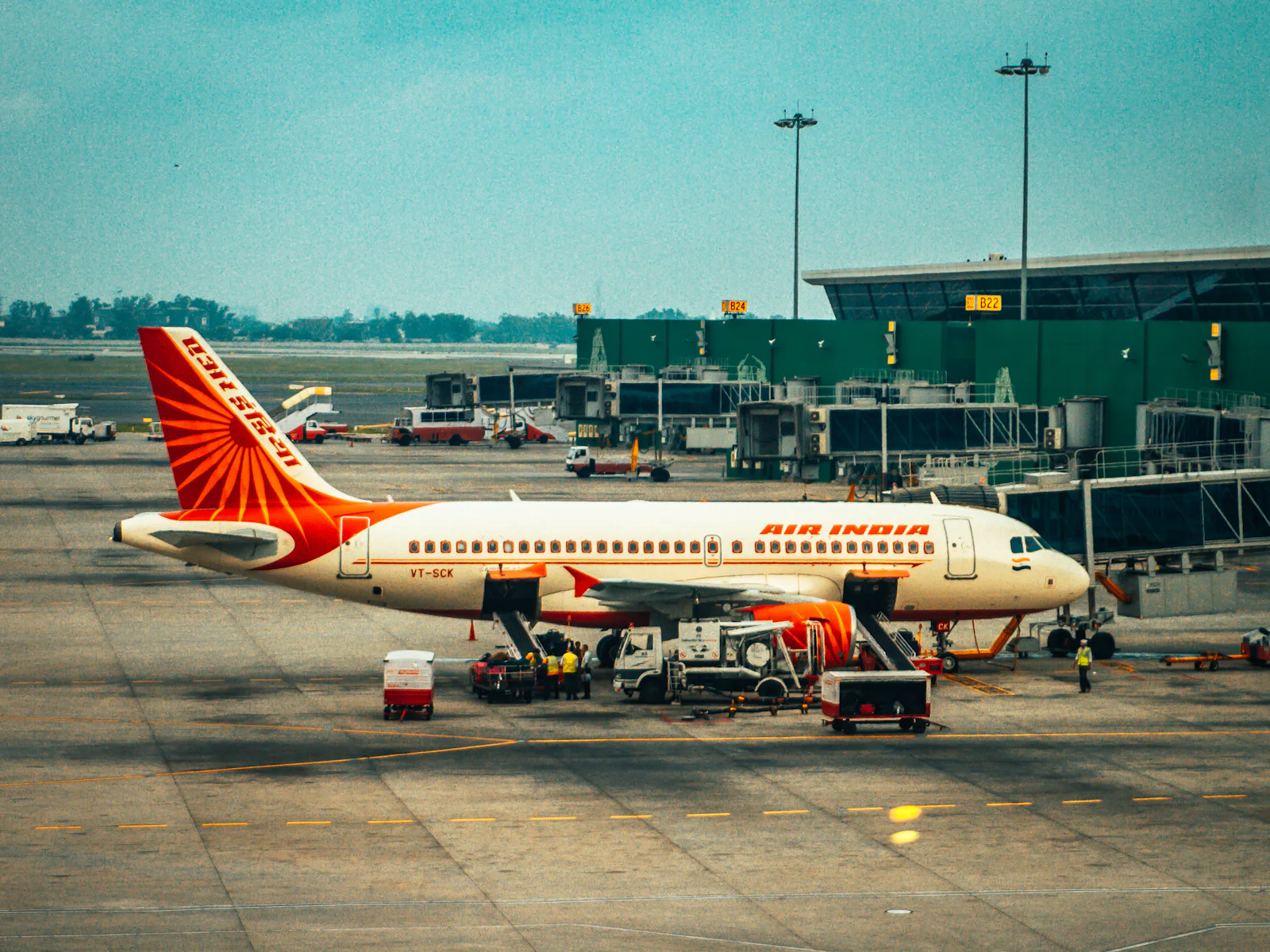
By taxi, Chandigarh to Shimla is about 115 km and three to four hours; Delhi to Shimla is about 350 km and seven to nine hours. Shimla's small airport at Jubbarhatti, about 22 km from town, has very few flights, so most people fly to Chandigarh.
| From | Distance | By taxi |
|---|---|---|
| Chandigarh | About 115 km | 3–4 hours |
| Chandigarh airport | About 125 km | 3.5–4.5 hours |
| Delhi | About 350 km | 7–9 hours |
| Manali | About 250 km | 7–8 hours |
| Kalka (toy train start) | About 90 km by road | 2.5–3 hours |
When to go
Shimla is pleasant from March to June, when the plains are hot, and this is the busiest season. The monsoon, July to mid-September, brings rain, fog and occasional landslides. Autumn, October and November, is clear and calm. Winter, December to February, is cold; snow falls in the town some years, usually in short spells, and more reliably at Kufri and Narkanda.
| Months | Weather | Good for |
|---|---|---|
| March–June | Mild and sunny | Sightseeing; peak crowds in May–June |
| July–mid-September | Rain and fog | Green hills; allow for delays |
| October–November | Clear and crisp | Views to the high peaks, fewer crowds |
| December–February | Cold; snow some days | Snow trips to Kufri and Narkanda |
What to see in Shimla
The centre of Shimla is the Ridge and the Mall, a long open promenade closed to most traffic, so you'll walk between the main sights. Taxis drop at points near the Mall, and a public lift connects the Cart Road to the Mall.
| Place | Where | Why go |
|---|---|---|
| The Ridge and Christ Church | Town centre | Open square with the Gothic church, completed around 1857 |
| The Mall | Town centre | Colonial promenade of shops, cafés and the Gaiety Theatre |
| Jakhu temple | About 2 km, uphill | Hanuman temple on Shimla's highest hill, with a huge statue |
| Viceregal Lodge | About 4 km west | The viceroy's summer residence of 1888, now the Indian Institute of Advanced Study |
| Lakkar Bazaar | Next to the Ridge | Wooden handicrafts and the old market lanes |
| State Museum | About 2.5 km | Himachal art, Pahari miniatures and history |
Day trips from Shimla
Shimla's surroundings are as much a reason to come as the town. A private car makes it easy to see two places in a day.
| Place | From Shimla | Why go |
|---|---|---|
| Kufri | About 16–19 km | Snow in winter, horse rides and the nature park |
| Mashobra and Naldehra | About 12–25 km | Pine forest, quiet resorts and a golf course |
| Chail | About 45 km | Palace, cricket ground and forest walks |
| Narkanda | About 60–65 km | Apple orchards, Hatu peak and winter snow |
| Kasauli | About 75 km | Quiet cantonment town on the way down |
How many days to spend
Two to three nights is enough for most visitors: a day for the Ridge, the Mall, Jakhu and the Viceregal Lodge, a day for Kufri and Chail or Narkanda, and a slower morning for Lakkar Bazaar and the museum. Shimla works well as the first stop on a Shimla–Manali trip, or as the start of a Kinnaur and Spiti circuit.
- Day 1: arrive, the Ridge, Christ Church, the Mall at sunset
- Day 2: Jakhu temple in the morning, Viceregal Lodge in the afternoon
- Day 3: Kufri and Chail, or Narkanda and Hatu peak
Practical tips
Shimla is steep, and the centre is reached on foot, so pack light and wear comfortable shoes. Hotels near the Mall are convenient for walking; those on the Cart Road or outside town are easier for a car. Monkeys around Jakhu snatch food, glasses and phones; keep them out of sight.
Traffic into Shimla can be slow on weekends and holidays, especially between Solan and the town. Snow days in winter close some roads to non-4x4 vehicles for a few hours. Carry layers: even summer evenings are cool.
Frequently asked questions
What is the best time to visit Shimla?+
March to June for pleasant weather, October and November for clear views, and December to February for snow nearby.
How far is Shimla from Chandigarh?+
About 115 km, three to four hours by taxi.
Is the Kalka–Shimla toy train worth it?+
Yes as an experience: about 96 km through 100-plus tunnels in five to six hours. It's slower than a taxi.
Does it snow in Shimla?+
Some winters, in short spells from December to February. Kufri and Narkanda get more reliable snow.
How many days are enough for Shimla?+
Two to three nights covers the town and day trips to Kufri, Chail or Narkanda.
Can cars drive on the Mall in Shimla?+
Mostly no. The Ridge and Mall are pedestrian; taxis drop nearby and a lift links the Cart Road.